
Ask someone how to become an actor and you'll probably hear a familiar list of advice: take acting classes, get professional headshots, build a demo reel, find an agent, and start auditioning.
None of those things are wrong. But according to award-winning actor, director, and Vancouver Film School Head of Acting Omari Newton, they aren't where becoming a great actor truly begins.
Best known for his work in Netflix's The Dragon Prince and the voice of Black Panther in LEGO Marvel Avengers: Time Twisted, Omari brings decades of experience across film, television, theatre, and voice acting to his role at VFS. As both a working actor and educator, he's helped hundreds of aspiring performers develop the skills needed to build lasting careers.
Over the years, Omari has watched hundreds of aspiring actors arrive with dreams of starring in film and television. Some arrive with years of theatre experience. Others have never stepped in front of a camera before. Yet the students who make the biggest leap aren't always the ones with the most experience or natural ability.
They're the ones who learn one simple lesson: Acting isn't about performing. It's about listening.
"When you're acting," Omari explains, "the most important person in the scene is your scene partner. Everything you're doing should be in service of trying to achieve your character's objective. If you're focused on how you're speaking or moving, the performance becomes about you instead of the story."
That philosophy has helped shape students like Sophia Carrier, who arrived at VFS with talent, curiosity, and a willingness to learn. While still completing the Acting for Film & Television program, she booked a series regular role, later returned to finish her training, and recently won the UBCP/ACTRA Award for Best Lead Performance in a TV Movie for The Girl in the Attic.
Her success didn't happen because she discovered a shortcut into the industry, it came from developing the habits every professional actor needs: learning the craft, embracing feedback, preparing relentlessly, and staying open to growth.
Whether you're wondering how to become an actor with no experience or looking to strengthen your existing skills, Omari believes the path is far less mysterious than many people think. It starts by changing the way you think about acting itself.
THE BIGGEST MISCONCEPTION ABOUT ACTING
If you've never acted before, chances are your first impression of the craft came from the stage. Maybe you performed in a high school production. Maybe you've watched actors command a theatre with booming voices and dramatic gestures. Or maybe you've simply assumed that acting means becoming someone larger than life.
According to Omari, that's where many beginners take a wrong turn.
"Most people's gateway into acting is through theatre, which is awesome," he says. "But when they move into film and television, one of the biggest adjustments is realizing that screen acting is much smaller and much more grounded."
Unlike a theatre audience sitting dozens of metres away, a film camera notices everything – a fleeting glance, a subtle hesitation, a thought that crosses your face for only a second.
"The camera captures your thoughts," Omari explains. "You don't need to project the way you would on stage."
That means many of the habits new actors rely on – raising their voice, exaggerating emotions, or trying to appear dramatic – can actually make a performance feel less believable on camera.
Instead, professional screen actors focus on something much simpler: listening.
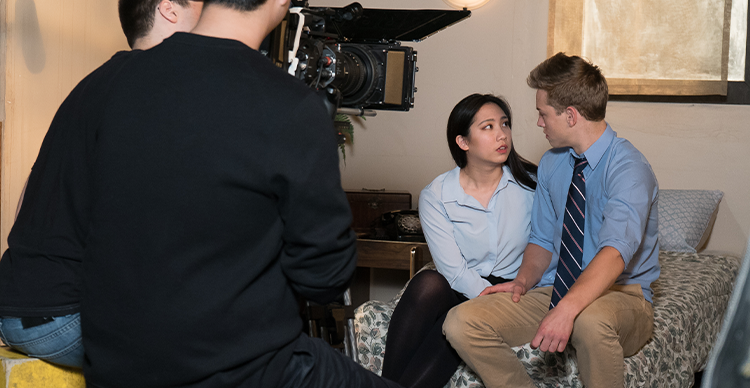 A male and female actor perform a scene on a student film production while the director and director of photography observe from behind the camera.
ACTING IS ABOUT YOUR SCENE PARTNER – NOT YOURSELF
Ask a beginner what they're thinking about during a scene and the answer is often surprisingly similar. Am I saying the lines correctly? Am I standing in the right place? Do I look convincing?
Those thoughts are understandable, but they're also distractions. "When you're acting," Omari says, "the most important person in the scene is your scene partner."
Every scene is built around an objective. Your character wants something, another character stands in the way, and the conversation becomes an attempt to overcome that obstacle.
When actors focus on achieving that objective instead of trying to appear emotional, something interesting happens.
The performance starts to feel genuine. Rather than manufacturing sadness, anger, or joy, they begin responding honestly to what's happening in the moment.
That's what audiences connect with. Not perfect line delivery, or dramatic facial expressions, but truth.
WHY LISTENING IS HARDER THAN IT SOUNDS
Ironically, listening is one of the most difficult acting skills to develop. Most people don't actually listen, they wait for their turn to speak. The difference might seem subtle, but it's immediately visible on camera.
Experienced actors allow themselves to be changed by what they're hearing. Their reactions evolve naturally because they're engaged with another person rather than reciting memorized dialogue.
Omari sees this shift as one of the biggest breakthroughs beginners experience. "The moment they stop trying to 'act' and start being present, and responding honestly to what's happening in the scene."
It's a deceptively simple lesson, and yet it changes everything that follows.
What this means for you: If you're practising a scene, stop worrying about whether you're delivering your next line perfectly. Instead, focus on understanding what your scene partner has just said – and let that genuinely influence your response. Authentic reactions are almost always more compelling than perfectly performed emotions.
WHY GREAT ACTING LOOKS EFFORTLESS
Watch a great performance and it's easy to believe the actor simply showed up, stepped in front of the camera, and let instinct take over.
In reality, the opposite is usually true.
Behind every performance that feels effortless are countless hours spent reading the script, understanding the character, rehearsing scenes, and refining every choice until it feels completely natural.
Experienced actors don't rely on inspiration.
They rely on preparation.
"I think experienced actors understand how crucial preparation is," says Omari. "Some young actors worry that if they rehearse too much, they'll lose the spontaneity. But it's actually the opposite."
To explain the idea, Omari points to one of the world's greatest performers.
"If you go see Adele perform Rolling in the Deep, she's probably sung that song a million times," he says. "It's that repetition and practice that gives her the freedom to do something spontaneous in the moment."
He sums it up with a quote every aspiring actor should remember:
"The illusion of spontaneity is created through repetition."
PREPARATION CREATES FREEDOM
Many beginners assume acting is about memorizing dialogue. Professional actors know that's only the beginning. Before they think about emotions or line delivery, they ask questions about their character's objectives, relationships, and motivations.
Understanding the script gives every line purpose. Instead of reciting dialogue, actors pursue something from the other person in the scene.
GREAT ACTORS WELCOME FEEDBACK
Every rehearsal becomes an opportunity to test a new choice. Every note is another chance to discover something you couldn't see on your own. That's why Omari pays close attention to how students respond to direction.
"You learn a lot by how someone takes direction," Omari says. "If someone is humble and receptive to notes, they're probably going to be a great student."
The actors who improve the fastest aren't the ones who get everything right the first time. They're the ones willing to let go of an idea that isn't working and try something new.
PROFESSIONALISM IS PART OF THE CRAFT
After years of working in the industry, Omari has found that professionalism often separates those who build lasting careers from those who struggle.
Showing up prepared, taking direction well, respecting the people around you, remaining curious instead of defensive – they may not sound like glamorous skills, but they're exactly what directors and collaborators remember.
"This is a very competitive field," Omari says. "Professionalism goes a long way."
What this means for you: Great performances rarely happen by accident. The actors who appear the most natural are usually the ones who've prepared the most. Put your energy into understanding the script, welcoming feedback, and developing professional habits – the effort you invest before the camera rolls is what creates performances that feel effortless.
HOW TO BECOME AN ACTOR WITH NO EXPERIENCE
One of the biggest myths about acting is that you need natural talent before you can begin. According to Omari, that's the wrong way to think about it. Like any craft, acting is built through deliberate practice, consistent feedback, and a willingness to improve.
"The first step is finding a reputable acting class," he says. "A great teacher gives you the foundation to build on."
Just as importantly, immerse yourself in the craft. Read influential acting teachers like Sanford Meisner and Uta Hagen. Watch great performances with a critical eye. Ask yourself not just what an actor is doing, but why they're making those choices.
LEARN THE CRAFT BEFORE YOU LEARN THE CAMERA
Many beginners want to jump straight into filming self-tapes or auditioning for roles. While that excitement is understandable, Omari believes your early focus should be on developing the fundamentals.
Omari recommends building your skills one layer at a time:
- Text analysis – understanding the script and your character's objectives
- Scene study – learning to listen and respond truthfully
- Improvisation – developing confidence and flexibility
- On-camera technique – adapting your performance for film and television
Notice what comes last: the camera. That's intentional; a camera can capture a great performance, but it can't create one.
Without a strong understanding of story, relationships, and objectives, even technically polished performances can feel empty.
WHAT YOU SHOULD ACCOMPLISH IN YOUR FIRST 30 DAYS
During your first month, don't worry about booking roles or building a résumé. Focus on developing good habits. Learn the fundamentals, practice consistently, and remember that becoming an actor is "a marathon, not a sprint." The goal is to build a foundation that will support everything that comes next.
A simple weekly routine might include:
- Reading plays and screenplays
- Watching acclaimed performances and asking why they work
- Recording yourself performing a scene
- Beginning voice and physical warm-ups
- Memorizing short scenes or monologues
- Taking notes after every class or rehearsal
AVOID THE SHORTCUTS
Every aspiring actor dreams about booking their first major role. The mistake is believing those milestones should come first. That's why Omari encourages aspiring actors to resist the temptation to skip ahead.
"No one would take one basketball lesson, then try to find an agent to land them a tryout for the LA Lakers. The pursuit of a professional acting career should be approached with the same humility."
The comparison highlights an important truth: actors who build sustainable careers usually spend far more time developing their craft than chasing recognition.
What this means for you: The fastest way to become a better actor isn't to rush toward auditions – it's to master the fundamentals. Build your skills patiently, and every opportunity that follows will stand on a stronger foundation.
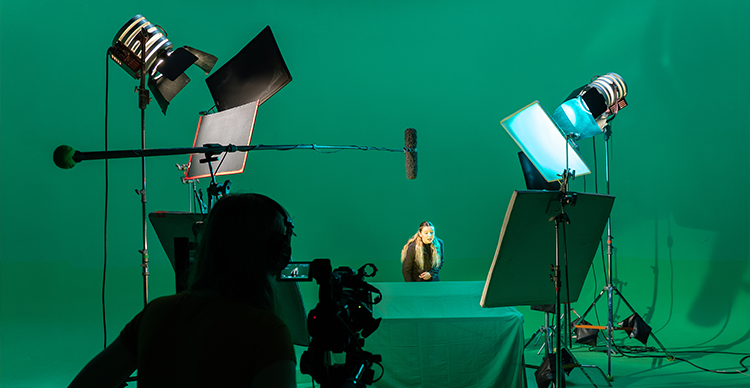 Vancouver Film School Acting students train in professional production facilities, including film sets, a green screen studio, and a large motion capture volume.
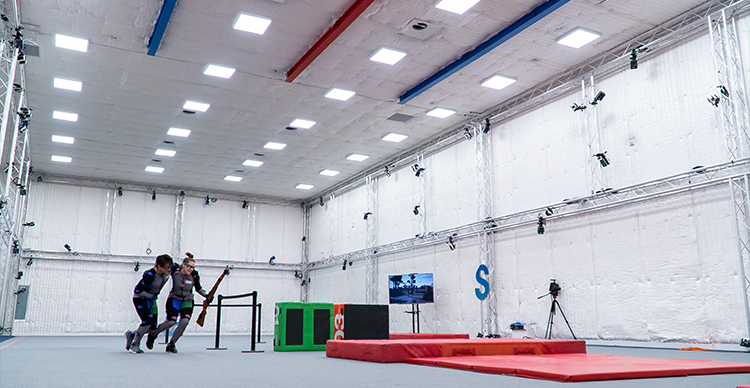 Vancouver Film School Acting students train in professional production facilities, including film sets, a green screen studio, and a large motion capture volume.
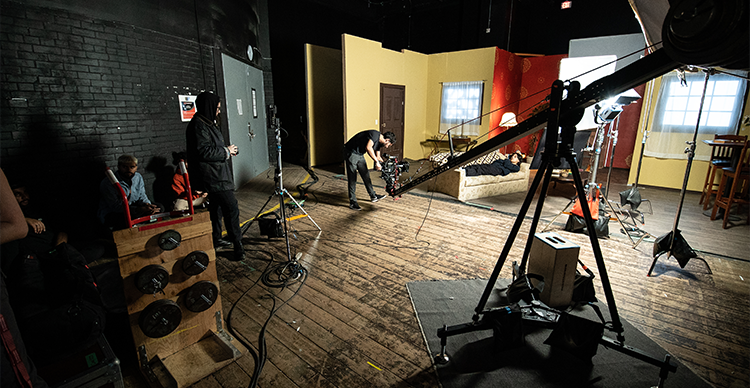 Vancouver Film School Acting students train in professional production facilities, including film sets, a green screen studio, and a large motion capture volume.
DO YOU NEED ACTING SCHOOL TO BECOME AN ACTOR
There's no single path into acting. Some performers begin in community theatre. Others learn through private coaching, workshops, or years of independent practice. Many successful actors have taken different routes into the industry.
The more important question isn't whether you attend acting school, it's whether you're putting yourself in an environment where you can consistently improve.
The biggest advantage of structured training isn't the techniques themselves, but being surrounded by instructors and scene partners who push your work further than you could on your own.
Every class gives you another opportunity to perform, every rehearsal gives you another opportunity to experiment, and every note gives you another opportunity to grow.
That's difficult to replicate when you're learning entirely on your own.
LEARNING ALONE HAS ITS LIMITS
There are plenty of acting skills you can begin developing without stepping into a classroom.
"AI can even help you run lines or simulate an audition reader when another actor isn't available," Omari says. "But it's not a replacement for working with actual humans."
Eventually, every actor reaches the same point – you need another person.
"Scene study, active listening, emotional responsiveness, improvisation, and rehearsal all require another actor," Omari explains. "Acting is about connection."
That's where structured training becomes so valuable. It doesn't simply teach technique, but also gives you people to practice with, instructors who can identify blind spots, and a safe environment to make mistakes before you're doing it in front of casting directors.
WHY PRODUCTION-BASED TRAINING MATTERS
One of the biggest differences between acting classes and a production-based acting program is context. You're going beyond simply performing scenes in isolation by learning how acting fits into the collaborative process of filmmaking.
At Vancouver Film School, students work alongside directors, writers, cinematographers, makeup artists, and other creative disciplines throughout the year, gaining experience in the same collaborative environment they'll encounter throughout their careers.
That also means learning the practical side of being a professional actor – working with cameras, adapting performances for different shot sizes, taking direction efficiently, understanding set etiquette, and building the confidence to perform under production conditions.
Those experiences are difficult to recreate in a traditional classroom alone.
CHOOSING THE RIGHT STARTING POINT
The best training depends on where you're beginning.
If you're completely new to acting, a preparatory program like Acting Essentials is designed to build the fundamentals. Students develop skills in voice, movement, improvisation, script analysis, audition technique, and on-camera performance while discovering whether acting is the right long-term path for them.
For students ready to fully immerse themselves in professional training, VFS's one-year Acting for Film & Television program expands those foundations through intensive scene study, on-camera performance, audition preparation, performance capture, voice work, and collaborative productions. Students also graduate with professional career assets – including demo reel footage, headshots, and industry-ready materials – to help launch their careers.
Regardless of which path you choose, Omari believes the goal remains the same – don't collect classes, build a feedback loop, perform, receive notes, apply those notes, and perform again.
That's where real growth happens.
What this means for you: The best acting program isn't necessarily the most expensive or the most famous – it's the one that consistently challenges you, surrounds you with other committed actors, and gives you regular opportunities to perform, receive feedback, and improve.
WHAT PROFESSIONAL ACTORS DO DIFFERENTLY
One of the biggest misconceptions new actors have is that rehearsing too much will make a performance feel stiff or over-rehearsed. They worry that memorizing every beat will rob a scene of its spontaneity.
Experienced actors know the opposite is true. As Omari puts it: "The illusion of spontaneity is created through repetition."
Ironically, that's when a performance begins to feel effortless.
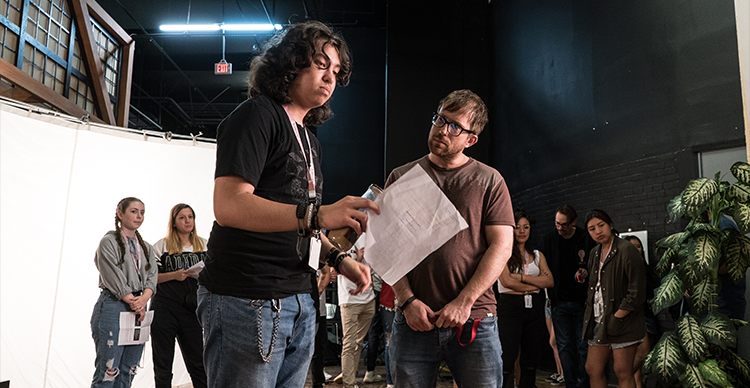 Students gather on a film set as an instructor reviews a script with a performer during a collaborative production exercise.
PREPARATION CREATES FREEDOM
For Omari, preparation starts long before an actor steps in front of a camera. It begins with understanding the script. Before thinking about emotions, accents, or even performance choices, experienced actors ask questions like:
- What does my character want?
- What's standing in their way?
- What tactics are they using to achieve that goal?
- How does this relationship change throughout the scene?
This process gives every line a purpose. Instead of reciting dialogue, actors begin pursuing something from the other person in the scene.
GREAT ACTORS WELCOME FEEDBACK
One of the fastest ways Omari can tell whether someone has the potential to grow is by watching what happens after they receive a note.
"You learn a lot by how someone takes direction," he says. "If someone is very humble and receptive to it, they're probably going to be a great student."
The difference is how they respond. Some become defensive, while others treat every note as a chance to discover something new about the scene.
Those actors tend to improve much faster because instead of trying to prove they're already good enough, they're trying to become better.
That willingness to adapt is one of the qualities Omari remembers most about successful students like Sophia Carrier. Even early in her training, she stood out for how present she was in scene work and how receptive she was to feedback from her instructors.
PROFESSIONALISM STARTS BEFORE YOU’RE A PROFESSIONAL
There's another quality Omari looks for that has nothing to do with performance – professionalism. Showing up prepared. Knowing your material. Following direction. Staying curious. Being reliable.
"They sound like basic things," Omari says, "but this is a very competitive field, and professionalism goes a long way."
What this means for you: Don't measure your progress by how emotional your performance feels. Measure it by how prepared you are. Read the script carefully, welcome feedback, and practise until the work feels second nature. That's what creates performances that audiences believe.
HOW TO START ACTING (WITHOUT WASTING YOUR FIRST SIX MONTHS)
One of the biggest mistakes aspiring actors make has nothing to do with acting itself – they rush. They rush to find an agent, to build a demo reel, to submit auditions before they've developed the skills to consistently deliver a strong performance.
It's understandable. When you're excited about acting, it's natural to want to get in front of casting directors as quickly as possible.
The goal is not so much to move quickly as it is to build a foundation that's strong enough to support everything that comes later.
PRACTICE ALONE – BUT DON’T STAY ALONE
One of the reassuring things about acting is that you don't always need another person to improve.
On your own, you can practise:
- Voice work
- Memorization
- Recording yourself on camera
Eventually, however, acting becomes impossible to learn in isolation. Scene study, improvisation, active listening, emotional responsiveness – those skills only develop when another human being is in the room.
"Acting is about connection," Omari says. "Eventually you need another human."
That's one of the biggest reasons structured training is so valuable. It gives you consistent opportunities to work with scene partners, receive professional feedback, and grow alongside other actors.
What this means for you: Don't worry about moving fast, worry about moving in the right order. Every hour you spend practising with intention today will make every audition, rehearsal, and collaboration stronger tomorrow.
WHEN ARE YOU READY TO AUDITION
Every aspiring actor eventually asks the same question: When should I start auditioning? Omari’s answer is simple, but it requires patience.
"Once you've completed foundational training and can consistently prepare and perform a scene that is clear and natural."
The keyword here is “consistently.” Anyone can have a good day or stumble into a performance that works.
Professional actors aren't defined by occasional success, but by repeatability. Casting directors need to know you can deliver the same truthful performance across multiple takes and after receiving direction.
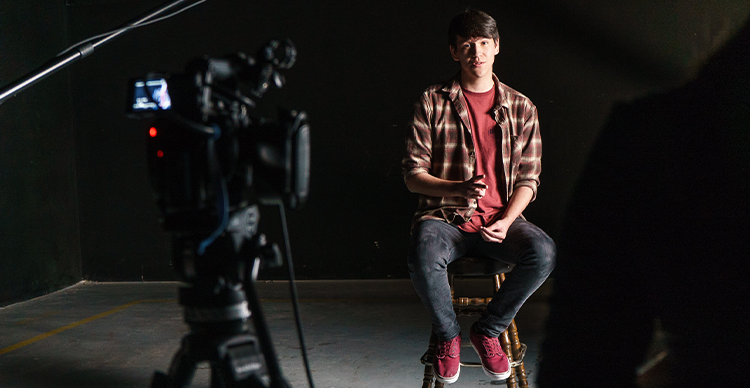 An actor performs an on-camera audition or self-tape in a professional studio environment, speaking directly toward the camera.
STOP GUESSING WHAT CASTING DIRECTORS WANT
Ironically, one of the biggest mistakes beginners make happens before they even walk into the audition room. They try to predict exactly what the casting director wants.
It's an understandable instinct. If you can figure out the "right" performance, surely your chances improve. According to Omari, that's the wrong way to think about auditions.
"The biggest beginner audition mistake is trying to guess what the casting director wants instead of making clear, informed choices supported by the script."
No actor knows exactly what a casting team is imagining. What you can control is your preparation. Commit to your interpretation, then trust the work you've already done.
YOUR JOB ISN’T TO BOOK THE ROLE
This might be the most liberating advice Omari offers. Before every audition, experienced actors remind themselves of one thing.
"My job is to present my interpretation of the role – not to book the job."
That distinction matters. Booking a role depends on countless factors outside your control: age, height, chemistry with another actor, a creative decision made weeks before you even arrived.
However, your responsibility is much simpler. Prepare thoroughly, arrive professionally, and tell the story truthfully.
Everything else belongs to the casting team.
REJECTION DOESN’T MEAN YOU FAILED
This is one of the hardest lessons for new actors to accept. Most auditions don't end with feedback. You won't always know why someone else booked the role.
Maybe they looked different from what the production imagined. Maybe they had stronger chemistry with another actor. Maybe the creative direction changed entirely.
That's why experienced actors focus on what they can actually improve:
- Did I understand the script?
- Did I make specific choices?
- Was I prepared?
- Did I stay present with my scene partner?
- Did I communicate professionally?
Those are the questions that lead to growth. Everything else is noise.
What this means for you: Judge an audition by whether you made clear, truthful choices, not whether you booked the role. If every audition leaves you a stronger actor than the one before, you're moving in the right direction.
HOW TO GAIN ACTING EXPERIENCE (EVEN IF YOU HAVE NO CREDITS)
One of the biggest misconceptions about becoming an actor is that you need professional credits before anyone will take you seriously. In reality, every working actor started with none.
The challenge isn't finding blockbuster roles, but finding opportunities to practise your craft, collaborate with others, and build experience one project at a time.
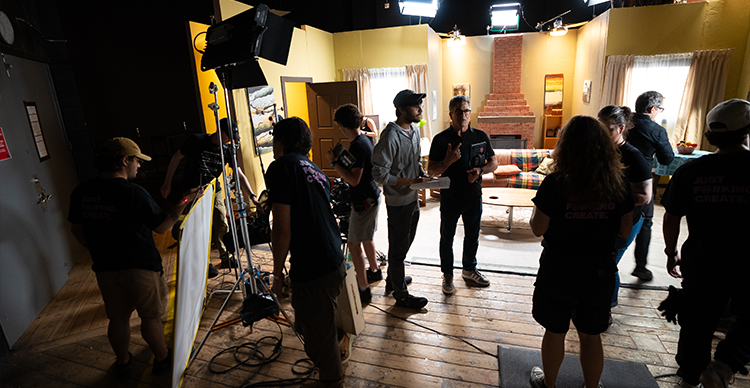 Students collaborate on a busy VFS film set during an acting bootcamp led by Emmy Award-winning director Michael Spiller, gaining hands-on production experience.
EVERY OPPORTUNITY TEACHES YOU SOMETHING DIFFERENT
When you're starting out, it's easy to think every opportunity exists solely to build your résumé. Omari encourages a different perspective.
Each project is a chance to develop a specific skill:
- A student film teaches you what it's like to collaborate on a real set.
- A scene study class teaches you how to listen and respond truthfully.
- Community theatre develops discipline, rehearsal habits, and confidence performing in front of an audience.
- Independent productions expose you to the realities of filmmaking, where flexibility, professionalism, and teamwork matter just as much as talent.
Instead of asking, "Will this project advance my career?" ask: "What can this project teach me?" That mindset leads to much steadier growth.
BUILD RELATIONSHIPS, NOT JUST CREDITS
Film and television are collaborative industries. Every set introduces you to directors, writers, cinematographers, producers, crew members, and fellow actors who are all learning and growing alongside you.
Some of today's classmates become tomorrow's collaborators. Others become the people recommending you for future projects.
Those relationships are built by consistently showing up prepared, doing good work, and being someone people enjoy working with.
DON’T CHASE BIGGER CREDITS – CHASE BETTER WORK
One of the easiest traps for new actors is believing that every project needs to be "bigger" than the last. A larger production, a bigger role, a more recognizable credit.
But that's not necessarily what helps you grow. A leading role in a well-written student film may challenge you far more than a tiny part with one line on a major production.
Likewise, performing opposite a committed scene partner in class may teach you more about acting than appearing in a project where you have little opportunity to develop a character.
Early in your career, the quality of the learning experience often matters more than the size of the credit.
KEEP BUILDING YOUR BODY OF WORK
Every rehearsal, self-tape, scene study exercise, short film – they're all pieces of your development as an actor.
Some may eventually become material for your demo reel. Others simply become milestones that show how far you've come.
The important thing is to keep creating opportunities to practise, because acting isn't a craft you master by reading about it. You master it by doing it.
What this means for you: Don't wait for someone to "discover" you before you begin acting. Seek out opportunities to perform, collaborate, and learn. Every honest performance adds another layer to your experience, and every project moves you forward.
WHEN SHOULD YOU GET AN AGENT
For many aspiring actors, signing with an agent feels like the moment their career officially begins.
It's easy to understand why. Agents submit actors for auditions, maintain relationships with casting directors, negotiate contracts, and help guide long-term careers.
But there's one misconception Omari hopes every beginner avoids. An agent doesn't create a strong actor, a strong actor earns the attention of an agent.
DON’T TREAT AN AGENT AS THE FINISH LINE
Many new actors believe finding representation should be one of their first priorities. According to Omari, it should be one of the last.
"Don't rush to find an agent, shoot an expensive demo reel, or chase auditions before you've built a solid foundation," he says. "Strong technique will open more doors than shortcuts ever will."
An agent can open doors, but what they can't do is walk through them for you. If your self-tapes aren't ready, your performances lack consistency, or your materials don't accurately represent your abilities, representation won't solve those problems.
That's why experienced actors focus on becoming ready first. The opportunities tend to follow.
BUILD MATERIALS THAT REFLECT YOUR BEST WORK
As your training and experience grow, you'll eventually begin assembling the tools every professional actor needs: a headshot, an acting résumé, a demo reel.
A professional headshot should accurately represent the type of roles you're ready to play today (not who you hope to become five years from now), your résumé should honestly reflect your experience, training, and special skills, and your demo reel should showcase your strongest work – not your longest work.
LESS IS OFTEN MORE
One of Omari's biggest pieces of advice for beginner demo reels is surprisingly simple: wait until you have material worth showing.
"When should someone create a demo reel? After you've filmed quality work that reflects the kind of roles you want to pursue," he says. "A short, strong reel is far more effective than a long one filled with weak material."
The same principle applies when deciding what to include. If a scene spends most of its time focused on someone else, it probably isn't helping you.
As Omari puts it: "If the clip doesn't highlight your performance, it doesn't belong in your reel."
Quality almost always beats quantity. A memorable 60-second reel is far more valuable than three minutes of footage that leaves casting directors wondering which actor they're supposed to be watching.
LET THE WORK SPEAK FOR YOU
There's no perfect moment to approach an agent. Every actor's journey looks different. But the strongest submissions have something in common.
They're supported by strong work, professional materials, and an actor who's ready to take advantage of the opportunities representation creates.
Those are the qualities agents, casting directors, and filmmakers notice first, because they make you dependable.
What this means for you: An agent shouldn't be the first step in your career, they should be the next step. Focus on becoming the kind of actor who makes representation an obvious choice, not a necessary shortcut.
A BEGINNER’S ROADMAP TO BECOMING AN ACTOR
There's no universal timeline for becoming an actor. Some people discover the craft as children. Others don't step onto a set until much later in life. Progress depends on your commitment, your opportunities, and the amount of time you dedicate to improving.
Here's what your first few months might look like.
- Month 1: Learn the fundamentals and establish a consistent practice routine.
- Month 2: Apply those skills with scene partners, feedback, and regular performance.
- Month 3: Start gaining experience and assembling professional materials when your work is ready.
Every actor's journey will look different, but the order matters more than the speed.
PROGRESS IS MEASURED IN GROWTH, NOT SPEED
One actor may book a role after six months. Another may spend years refining their craft before the right opportunity arrives.
Neither path is more "correct."
THE BEST TIME TO START IS NOW
There will always be reasons to wait. You might feel like you need more confidence, more experience, or more natural talent before you can call yourself an actor. You might worry that you've started too late, or that everyone else is somehow further ahead.
The students who ultimately succeed aren't necessarily the ones who arrive with the most experience. They're the ones who stay curious, embrace feedback, and keep showing up to do the work.
Acting is about more than discovering some hidden talent you either have or you don't – it's a craft. And like any craft, it rewards patience, discipline, and a willingness to improve one performance at a time.
The sooner you stop searching for shortcuts and start building your craft, the sooner you'll begin developing the skills that sustain a career – not just land a role.