
Key Takeaways
- Seventeen VFS alumni and one instructor contributed to the production of Backrooms, one of 2026's biggest horror films.
- 3D Animation & Visual Effects alumni Andrea Garcia de Alba and Andres Ferrat reveal how Beyond Capture Studios helped create the film's unforgettable opening sequence.
- The alumni share firsthand insights on motion capture, emerging technologies, and the skills that helped launch their careers after VFS.
It’s been a great year for horror fans.
From Obsession, which continues to shatter box office records, to Send Help, Hokum, and Bone Temple – the latest installment in the 28 Years Later franchise – there’s been no shortage of chills in 2026. Among this year’s biggest success stories is Backrooms. Starring Chiwetel Ejiofor and Renate Reinsve, and directed by YouTuber-turned-director Kane Parsons, the film has surpassed a global box office of $350M in under two months.
Behind the scenes, 17 Vancouver Film School alumni helped craft this breakout horror film, from sound to animation, VFX, and makeup. This week, we’re spotlighting their contributions, including a conversation with Andrea Garcia de Alba and Andres Ferrat, 3D Animation & Visual Effects alumni who served as capture technician and realtime operator, respectively, at Beyond Capture Studios – a mocap stage located on VFS’s campus and an official VFS partner.
MEET THE 17 ALUMNI (AND 1 INSTRUCTOR) WHO WORKED ON BACKROOMS
The VFS alumni credited on Backrooms span a variety of our programs – from Film Production to Acting for Film & Television and Acting Essentials, Makeup Design for Film & Television, Sound Design for Visual Media, and 3D Animation & Visual Effects. With roles ranging from 2nd assistant camera to foley recordist/mixers, makeup FX artists, animation supervisors, and department managers, their collective work highlights the collaborative nature of filmmaking.
Our alumni from Beyond Capture, in particular, were involved in capturing the camera animation for the opening scene (i.e., the first found footage sequence) of the film. According to Andrea and Andres, everything moved very quickly – going from contract to recording in less than one week.
Additionally, VFS Makeup Design instructor Crissy Renaud (The Last of Us) served as a makeup FX lab technician with Amazing Ape Productions, creating special effects makeup for the film with Renaud’s role focused on creating hair work for several of the character makeups.
“One of the biggest challenges was adapting our techniques to the creature designs,” Crissy comments. “Some of the heads were much larger than a normal human head, so we had to increase the length and scale of the hair fibers to keep everything looking proportional. Other characters featured multiple eyes and unusual facial anatomy, which required much more detailed work than a traditional makeup.”
“Seeing those unique designs come to life on screen gave me an even greater appreciation for the creativity and problem-solving involved in Makeup FX. It was also incredibly rewarding to share the experience with my students. When they learned I had worked on Backrooms, they were excited to watch the film and see my name in the credits.”
THE BACKGROUND ON BACKROOMS
Long before Backrooms became one of 2026's biggest horror films, it began as a viral YouTube short created by then-teenage filmmaker Kane Parsons (Kanepixels). Inspired by the internet's infamous "backrooms" creepypasta – a seemingly endless maze of yellow-lit, empty rooms existing just beyond reality – Parsons' found-footage series captivated millions of viewers with its unsettling atmosphere, worldbuilding, and visual storytelling. The phenomenon quickly caught Hollywood's attention, with A24 adapting the concept into Parsons' feature directorial debut.
Released in May 2026, Backrooms has proven that internet-born storytelling can thrive on the big screen. Made on a $10 million budget, the film has become both a critical and commercial success, earning widespread praise for its immersive atmosphere, ambitious sound and production design, and Parsons' confident direction. Critics have praised the film as a striking feature debut, while audiences helped propel it to hundreds of millions of dollars at the global box office, cementing Backrooms as one of the year's breakout horror hits and one of A24's biggest successes to date.
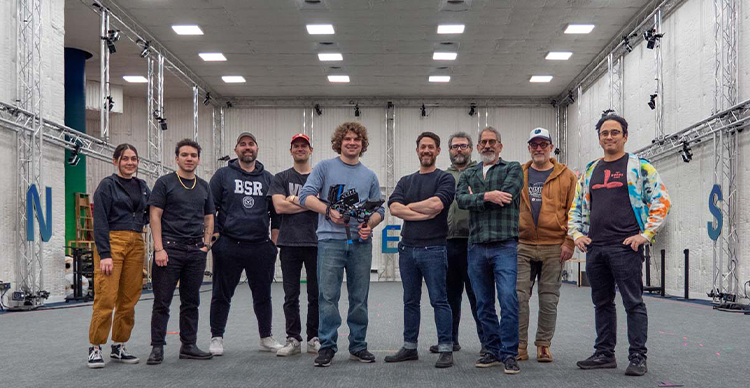 Director Kane Parsons on set with the VFX capture team and Beyond Capture team – including Andrea Garcia de Alba and Andres Ferrat.
OUR INTERVIEW WITH THE VFS ALUMNI FROM BEYOND CAPTURE
Andrea Garcia de Alba and Andres Ferrat sat down with us to give us the full scoop on their work on the film, reflect on their origin story as students at Vancouver Film School, and more:
Tell us everything about your role on Backrooms.
ADA: I took the role of capture technician which is the person who is triggering the camera system to capture the data and calling out the take names, as well as taking relevant notes and supporting with any technical issues. After the shoot was over, I moved back to my usual role which is post-production manager and I helped with quality check and delivering the finished files to the client.
AF: As the realtime operator, my role was to have everything ready before the shoot. That meant preparing the scene in advance so the camera was fully set up for motion capture, as well as matching the digital environment to our physical stage by marking walls, corners, and other boundaries to make sure the virtual camera wouldn't collide with them.
During the shoot, I was responsible for capturing the animation of the physical virtual camera that Kane Parsons was operating as well as navigating the digital environment in real time so we could record the entire sequence.
Is there a particular moment that you’re especially proud of helping bring to life?
ADA: Since we were only capturing the virtual camera for the first few minutes of the movie, what I feel proud of is being part of the team who recorded Kane’s movements and captured his vision as close as possible to his actual performance. I’ve been told by several people who have watched the movie that those first minutes are what really sold the eerie feeling of Backrooms and I feel that’s where motion capture really shines in making a digital environment come to life.
AF: I'm incredibly proud to know that the work we contributed became such an important part of the film. It’s an honor for me to have been part of an A24 production.
What were some of the biggest challenges your team encountered?
ADA: One of the biggest challenges in post-production simply came down to turnaround time. The VFX team who integrated what we recorded during the shoot needed the data as soon as possible as their deadline was coming up. We ended up processing everything, troubleshooting and fixing any issues within a day.
AF: The biggest challenge was fitting the environment within our motion capture volume… we had to divide the digital space into eight different sections to make it work within our capture area. Each section had to be carefully aligned so the camera movement remained seamless throughout the entire sequence.
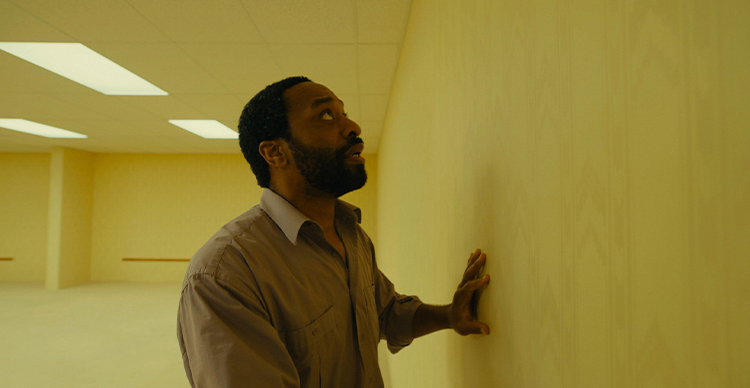 Chiwetel Ejiofor co-stars in A24’s Backrooms.
Before joining Beyond Capture, you trained at VFS. Looking back, which parts of your VFS experience most directly prepared you for the work you’re doing today?
ADA: What prepared me the most from my VFS experience was the use of multiple 3D software to the point of becoming comfortable using them and being able to understand the logic behind them. Even though I never got to use any of the software I’m currently using at Beyond, there was a lot of skill and logic that was transferrable between say Autodesk’s Maya to Motion Builder. Another important thing was developing my knowledge in animation and what looks good and real, which I’d say is the most important aspect in motion capture.
AF: I think learning so many different software packages was one of the most valuable parts of my VFS experience. When you join a new company, they're often using different tools and workflows, and being comfortable learning new technologies makes that transition much easier.
The technology used in film production is changing quickly. What skills do you think are becoming most important for artists hoping to build careers in this side of the industry?
ADA: Learning to use Unreal Engine is a big one; most of the work we do at Beyond is for video games and every day, more and more clients ask about it. There’s just so many things you can do with it, ranging from backgrounds in Virtual Production to integrating sound effects with triggers in an environment. Using AI as a support tool is also becoming a big thing in the industry, as artists I know we’re all very understandably cautious with its use, but it is highly useful as support in developing tools to automate processes and reduce production time.
AF: I think we're in the middle of a big shift. Independent productions are becoming more common, technology has advanced tremendously, and it's now easier and more accessible than ever to create your own content.
If you want to build a career in this industry, I think the most important thing you can do today is create and share your work. Whether it's animations, illustrations, short films, or anything else, put your work out there and let people see what you're capable of.
For aspiring filmmakers who would love to one day work on a production like Backrooms, what do you wish you had known when you were first starting your career?
ADA: Always be open to new opportunities. The entertainment industry is ever-changing and there’s always a new thing going on, so to be in the loop of what’s trending and exploring new tools, programs or workflows is really valuable.
AF: Start now. A lot of us hold back because we feel like we're not ready yet, but in my experience, you learn far more from the things you try and fail at than from the things you never attempt. If you're passionate about this industry, don't wait until you get into the “right” school or can afford the best equipment. There are amazing learning resources available online, and today's technology has made visual effects and content creation more accessible than ever. The most important step is simply getting started.